
Hosannas from the Ashes
God, save us

Ash Wednesday marks the beginning of Lent, a 40-day period of repentance and fasting in preparation for Good Friday and Easter Sunday. It is a longstanding tradition that ashes are placed on the believer’s forehead as a sign of grief over sin. These ashes are made in the sign of the cross as a confession of Christ’s victory over sin and death by His own sacrifice.
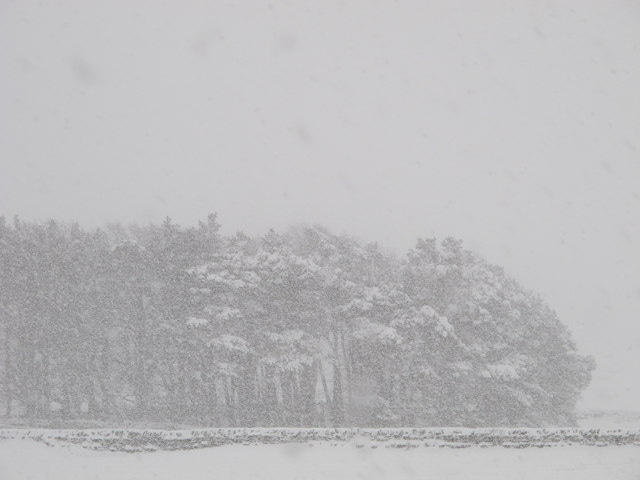
Many churches use the ashes of palm branches for this practice. These palms were saved from the previous year’s Palm Sunday celebration, remembering Christ’s entry into Jerusalem to the cries of Hosanna (God save us)! Blessed is He who comes in the name of the Lord! It is a cycle that struck me as particularly beautiful last year, when we were hit with a fierce winter storm on Ash Wednesday on March 5th. I wrote the following piece on that day.
Hosannas From the Ashes
A fierce northern gust lifts the fresh-fallen powder. Clouds of it rise from the flooded, now frozen, field behind our house: some chaotic inversion of the orders of precipitation. The wind sings a mournful cry through the chimney down into the shelter of my living room. In its force, the spruce trees above and around our house sway and shake, their branches waving like palms —
Like the palms which carried last year’s Hosannas in the sanctuary, yesterday burnt to ash then mixed with oil in my own kitchen to today adorn the penitent.
The spruce raises a different Hosanna from those palms: a cry for salvation from the heart of the storm, the testing of a long winter, the depths of the ash-heap. His cry is not one of jubilation, but desperation — God, save us!
Two of my boys rushed out into the storm, clad in full snow gear. Moments later, they returned to me, tearfully and earnestly pleading for relief from their self-imposed Siberian exile. One son, who prays for winter snow year-round, cried out in indignation:
“Mama, why is the wind so big? I don’t want the wind. The wind needs to stop!”
“Son, God sent the wind today,” I explained softly as I helped his brother out of his outer layers. “We can ask Him to make it stop, but we must learn to be content if He lets it stay.”
“Though your sins be as scarlet,” my husband had muttered, as he looked out the window, “I will wash you white as snow.”
Today, the snow whites out the windows, whips across our faces, accosts us with its purifying crystals.
Today, I am confronted by a holiness which I do not always desire: a costly obedience, a daily cross-bearing, the wrestling of my discontent with the hundred trees my Lord has given for fruit, that I should desire instead the one which he forbade.
I have eaten of this fruit of discontent since my youth, and surely I have died, and died, and died again, so easy it is to forsake the good and perfect given will of God in desire of that which He has withheld from me. But the sin which returns man to dust also brought forth from God a covering of mercy:
skin of an animal, slain by God Himself;
blood of the Lamb, offered by God Himself;
a violent snowstorm, splashing abundant atonement sideways and headlong, piling up in heaps along the fence.
I will wash you white as snow.
I wish God’s mercy and holiness were not so severe, but I see that it is, in fact, severity I need, for my heart sleeps in forgetfulness of His love: a love so fierce it demands all of me because all of me needs Him.
Come, let us return to the Lord:
He has torn us, that He may heal us;
He has struck us down, and He will bind us up.
After two days He will revive us;
On the third day, He will raise us up,
That we may live before Him.1
I want the wind to stop. I wish I could smile over a smooth blanket of snow illuminated by a brilliant blue, sun-filled sky. Instead, I close my lips tight against the icy blast so it cannot enter my lungs and paralyze my breath. Instead, I am surrounded by a ceaseless, swimming white — above, beside, below. This holiness is too much for me. It might undo me.
Men have been undone by His holiness before.
If God chooses to grant His holiness to me by force, to draw Hosannas and Kyries2 from my lips in the desperation of a winter storm, I must learn to be content.
God is not destroying me; He is atoning for me. There is ash for iniquity, snow for scarlet sin, blood of the eternal covenant for forgiveness.
Lamb of God, you take away the sin of the world;
Have mercy on us!
Last year:

Notes on Fasting and Fighting Sin:
When You Fast by Rev. Scamman at The Lutheran Witness. Great explanation for the practice of fasting, in a circle where it’s fallen out of favor. As a nursing mother, I don’t practice fasting by going without food, but I do practice it by going without certain types of food and other good things.
Examining the Conscience with Media Intake. This article by Autumn Mackenzie boldly and heatedly argues something that I do not think should be controversial at all among Christian women: reading or watching “smut,” “spicy” novels or fan fiction, “romantasy,” etc. is bad for us and not making us holy.
Uh, well, I guess that might be controversial among us.
If you’re reading or watching explicit/provocative material and justifying it as not that bad, I’d encourage you to give it up during Lent and observe how your mind and body respond over the 40-day break. Then, regardless of how you feel, don’t pick it back up. Jesus is better, and His goodness is found in what He has actually given you. He wants you to be free to pursue eternal treasures, rather than being enslaved to your immediate cravings.
If you’re immersed in this material and know you should stop, do it. And know that you’re not alone. Many women are struggling with the temptation toward literary/cinematic erotica. These sins, like all sins, ought to be confessed to your pastor — which can be extremely difficult, I know — and it might be easier to confess first to a girlfriend and even bring her along. (Any tips here from readers who aren’t married to pastors?) Then, keep trusting in Jesus’ forgiveness: you are washed white as snow. Keep fighting against your lustful desires and building life-giving habits. Believe you have, indeed, been made new in the power of the Holy Spirit. Ask God for opportunities to nurture solid real-life connections and to do good work that will benefit others. It’s hard, but it’s worth it.
Blessed are the pure in heart, for they shall see God.
Ten Commandments. I’m going through the Ten Commandments with some reflection questions during this season using Luther’s Large Catechism. These are kind of sermons on each commandment and I’ve always found them very helpful for expanding the meaning and heart of each. If you are interested in reading on the Ten Commandments in Luther’s Large Catechism, you can find it online here.
Hosea 6
“Lord, have mercy!”
Leah, this essay shines.
From a writerly perspective, it's one of your best pieces, with the form (diction, structure, syntax, imagery) a perfect servant to the message. With the placement of certain lines you were able to say so much in so few words, and so powerfully.
From a faith perspective... well, I really said, "Oh... Oh wow" every couple of paragraphs, moved almost to tears while reading in a public setting.
> "severity I need, for my heart sleeps in forgetfulness of His love: a love so fierce it demands all of me because all of me needs Him."
> "God is not destroying me; He is atoning for me."
Extremely convicting, yet not scathing; urging repentance, yet not reproachful. There are many essays that get me thinking but don't exactly get me praying; this one makes me want to seek the Lord all the more fervently this Lent.
I also love getting a peek into the Lutheran tradition through your writing, and I was totally unaware of the details of the ashes tradition. The resources at the end are great, too.
Thank you for writing and sharing!
Edifying writing!